The Future of EV Charging Starts with the Right Installation
India’s electric vehicle market is growing at an unprecedented pace. As more electric cars, buses, and commercial fleets hit the roads, the need for reliable EV charging infrastructure is greater than ever. However, many businesses assume that installing an EV charging station is a simple plug-and-play process.
The reality is very different.
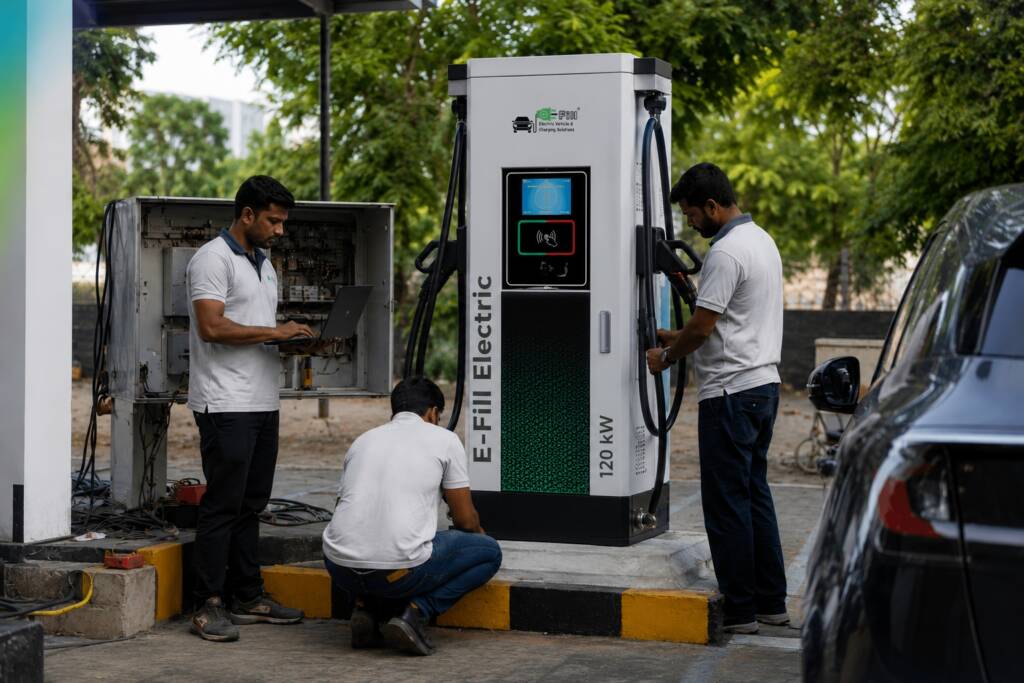
Installing an EV charging station requires careful planning, electrical engineering, regulatory compliance, software integration, and long-term maintenance. A poorly planned installation can lead to delays, increased costs, safety risks, and reduced charger performance.
At E-Fill Electric, we believe that successful EV charging infrastructure begins long before the charger arrives on-site. From site assessment to commissioning, every step plays a crucial role in delivering a reliable charging experience. As India’s EV ecosystem expands, professional installation has become just as important as the charger itself.
Why EV Charging Station Installation is More Complex Than You Think
1. Choosing the Right Location
Location is one of the most important factors in any EV charging project.
A charging station should be convenient for EV users while also supporting efficient electrical connectivity and future expansion.
A professional site assessment evaluates:
- Available parking space
- Vehicle movement
- Accessibility
- Visibility
- Safety clearances
- Distance from electrical panels
- Future charging demand
Selecting the wrong location can significantly increase installation costs due to longer cable runs and additional civil work.
2. Electrical Infrastructure Assessment
One of the biggest challenges in EV charger installation is power availability.
Fast DC chargers require significantly higher electrical capacity than conventional commercial equipment.
Before installation, engineers evaluate:
- Transformer capacity
- Existing electrical load
- Distribution panels
- Utility connection
- Future load growth
If the existing electrical infrastructure cannot support the required load, upgrades may be necessary before installation begins.
3. Civil Work is Often the Longest Phase
Many people think installing the charger is the hardest part.
In reality, preparing the site often takes more time.
Civil work may include:
- Concrete foundations
- Cable trenching
- Underground conduits
- Earthing systems
- Drainage planning
- Protective barriers
- Equipment mounting
A properly constructed foundation improves equipment reliability and reduces maintenance costs.
4. Safety Comes First
EV charging stations operate at high voltage and high current.
Professional installation ensures compliance with electrical safety standards through:
- Proper earthing
- Surge protection
- Circuit breakers
- Insulation testing
- Ground resistance testing
- Emergency shutdown systems
A safe installation protects both users and equipment while minimizing operational risks.
5. Software Integration is Essential
Modern EV chargers are intelligent connected devices.
Installation also includes configuring:
- OCPP communication
- Remote monitoring
- Mobile applications
- RFID authentication
- UPI-enabled payment systems
- Fleet management platforms
- Cloud connectivity
- Firmware updates
Without proper software configuration, even the best hardware cannot deliver a seamless charging experience.
6. Government Approvals and Compliance
Commercial EV charging stations must comply with applicable electrical regulations and local authority requirements.
Depending on the project, approvals may involve:
- Electricity distribution companies
- Local authorities
- Electrical safety inspections
- Fire safety compliance
Working with an experienced installation partner helps simplify documentation and reduce approval delays.
7. Planning for Future Expansion
Today’s charging demand may double within the next few years.
A future-ready charging station should be designed with scalability in mind.
Planning ahead allows businesses to easily add:
- Additional charging points
- Higher-capacity DC chargers
- Solar integration
- Battery energy storage systems
- Smart load management
Future-proof infrastructure reduces long-term investment costs.
8. Long-Term Maintenance Matters
Installation is only the first step.
Reliable charging infrastructure requires regular maintenance to ensure maximum uptime.
Preventive maintenance includes:
- Connector inspection
- Cable testing
- Software updates
- Performance monitoring
- Remote diagnostics
- Preventive servicing
Routine maintenance improves charger reliability, enhances user satisfaction, and extends equipment life.
Why Businesses Choose E-Fill Electric
At E-Fill Electric, we provide complete EV charging infrastructure solutions tailored for commercial, industrial, public, and fleet applications.
Our end-to-end services include:
 Site Survey & Feasibility Study
Electrical Infrastructure Planning
Civil Design & Installation
AC & DC EV Charger Installation
Smart Charger Configuration
Commissioning & Testing
Remote Monitoring
Annual Maintenance & Technical Support
Whether you’re installing a workplace charger, a fleet charging hub, or a public fast-charging station, our team ensures every project is safe, scalable, and built for long-term performance.
The E-Fill Electric Advantage
Unlike conventional installation providers, E-Fill Electric offers a complete solution—from planning and engineering to installation and after-sales support.
Our charging solutions are designed for:
- Commercial complexes
- Highway charging stations
- Fleet operators
- Residential communities
- Corporate offices
- Hotels and hospitality
- Industrial facilities
- Government projects
With advanced technology, intelligent charging management, and a customer-first approach, E-Fill Electric is helping power the future of sustainable mobility.
Conclusion
Installing an EV charging station is much more than installing electrical equipment. It requires careful planning, engineering expertise, regulatory compliance, intelligent software integration, and ongoing maintenance.
Choosing an experienced partner ensures your charging infrastructure is reliable, future-ready, and capable of supporting India’s rapidly growing EV ecosystem.
If you’re planning to deploy EV charging infrastructure, E-Fill Electric is ready to help you build a smarter, safer, and more sustainable charging network.
Frequently Asked Questions (FAQs)
How long does it take to install an EV charging station?
Installation timelines depend on site conditions, electrical infrastructure, charger capacity, and approval requirements. Commercial projects may take several days to a few weeks.
Why is a site survey important before installation?
A site survey identifies electrical capacity, parking layout, cable routing, safety requirements, and installation challenges, helping reduce project delays and costs.
Can any location support a DC fast charger?
Not always. DC fast chargers require sufficient electrical capacity and may need transformer or distribution upgrades before installation.
Does an EV charging station require regular maintenance?
Yes. Preventive maintenance helps maximize uptime, improve safety, and extend the operational life of the charging equipment.
Why choose E-Fill Electric?
E-Fill Electric provides end-to-end EV charging solutions, including site assessment, installation, commissioning, software integration, and after-sales support.